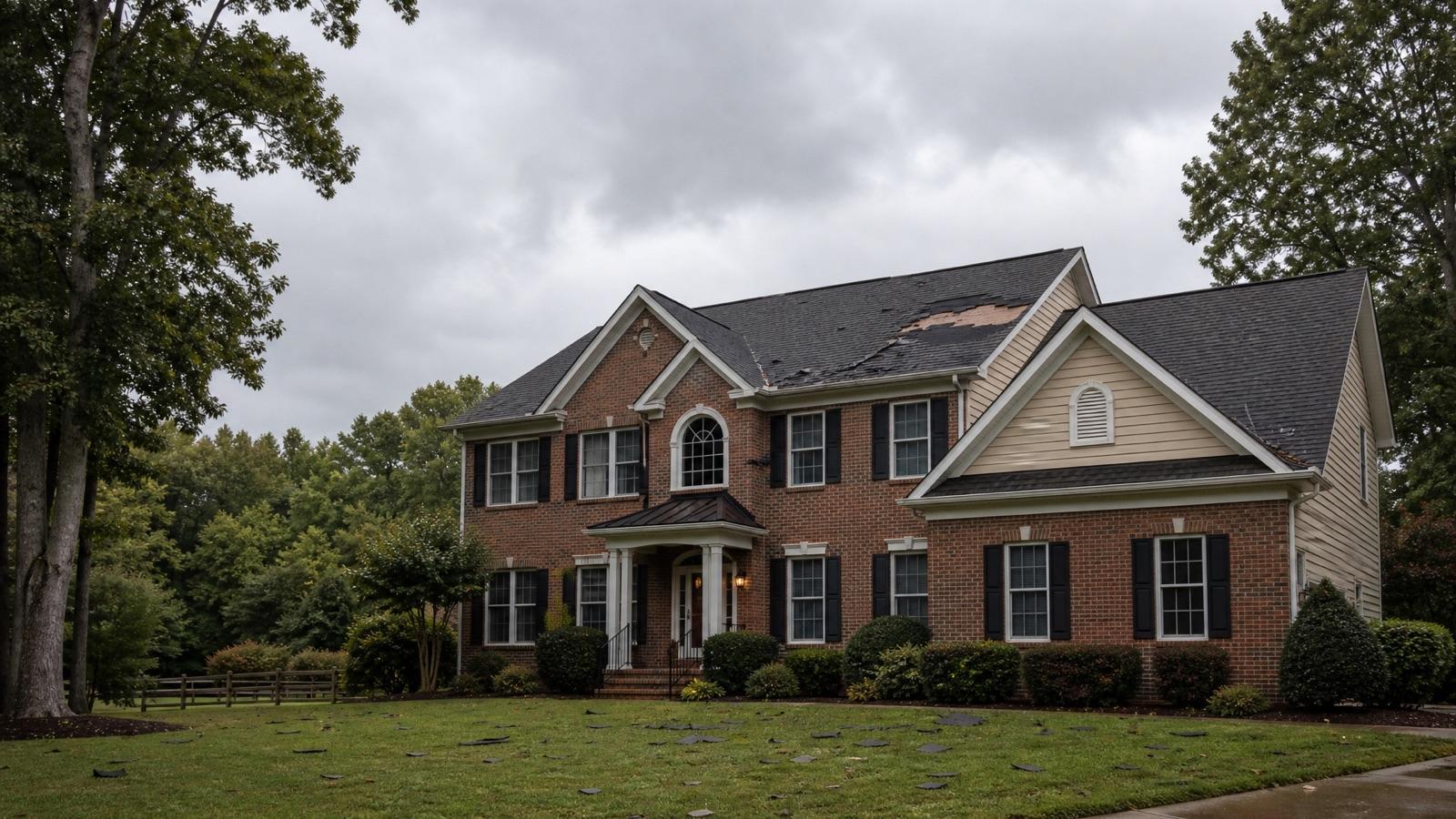
Few roofing problems are as easy to spot as missing shingles, yet many homeowners underestimate the damage they can cause. A single area of missing shingles may seem minor after a storm, but it can expose critical components of the roof system and create pathways for moisture intrusion.
Whether the issue involves a few missing roof shingles or widespread storm-related damage, acting quickly is essential. Left unaddressed, missing shingles can lead to water damage, roof leaks, deteriorating roof decking, and even costly structural damage.
Understanding what causes missing shingles, how to assess the situation, and when to pursue roof repair versus a full roof replacement can help homeowners protect their property and extend the lifespan of their roofing system.
What Causes Missing Shingles?
Several factors can contribute to missing shingles, particularly on older roofs or homes exposed to severe weather.
Storm Damage
One of the most common causes of missing roof shingles is storm damage. High winds can break the sealant bond that holds shingles together and lift them from the roof surface. Once that sealant strip is compromised, shingles become more vulnerable to future wind events.
Even modern architectural shingles, which generally provide greater wind resistance than traditional 3-tab shingles, can be damaged during severe weather.
Aging Roofing Materials
Over time, asphalt shingles become brittle due to sun exposure and weathering. As shingles age, the adhesive properties of the sealant strip weaken, making them more susceptible to lifting and detachment.
Improper Installation
Incorrectly placed roofing nails, inadequate fastening patterns, or poor installation practices can contribute to premature shingle failure. Missing or improperly driven nails can reduce the overall performance of the roofing system and increase the likelihood of roof damage during storms.
Freeze-Thaw Cycles
In climates that experience seasonal temperature fluctuations, repeated freeze-thaw cycles can gradually weaken roofing materials. Expansion and contraction stress both shingles and fasteners, increasing the potential for loose shingles and eventual shingle loss.
Why Missing Shingles Are a Serious Problem
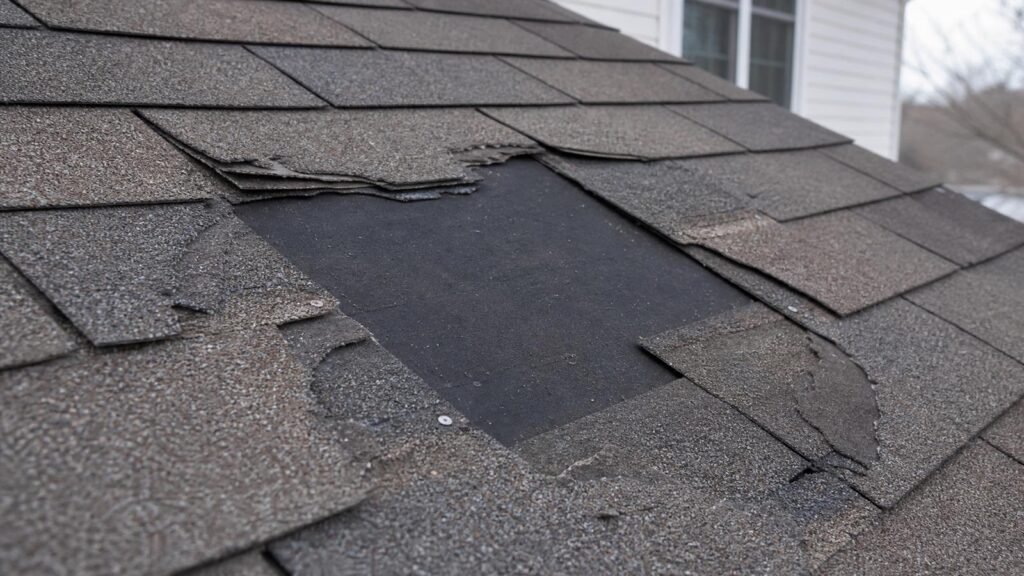
The visible absence of shingles is often only the beginning of the issue. The greater concern is what happens beneath the surface when the roof is exposed.
Exposure of the Underlayment
Shingles serve as the primary protective layer of the roof system, but they are not the only defense against moisture. Beneath them lies the underlayment, which acts as a secondary water barrier.
When missing shingles expose the underlayment, that material becomes vulnerable to UV degradation, weather exposure, and eventual failure.
Increased Risk of Roof Leaks
One of the most immediate consequences of missing roof shingles is the potential for a roof leak. Water can infiltrate beneath surrounding shingles and penetrate vulnerable areas of the roofing system.
Signs of a developing roof leak may include:
- Interior water stains
- Damp attic insulation
- Ceiling discoloration
- Mold or mildew growth
Multiple roof leaks can develop if damaged areas are not addressed quickly.
Water Damage and Structural Problems
As moisture enters the home, it can lead to extensive water damage. Wet materials deteriorate over time, and prolonged exposure can affect framing, insulation, drywall, and flooring.
If ignored, moisture intrusion can contribute to significant structural damage, requiring far more extensive repairs than replacing a few shingles.
Damage to Roof Decking
The roof decking serves as the structural foundation of the roof. Once moisture penetrates the roofing system, the decking can begin to soften, rot, or delaminate.
At that point, what started as a simple shingle issue may evolve into a larger project involving decking replacement and more substantial roofing repairs.
What Homeowners Should Do After Discovering Missing Shingles
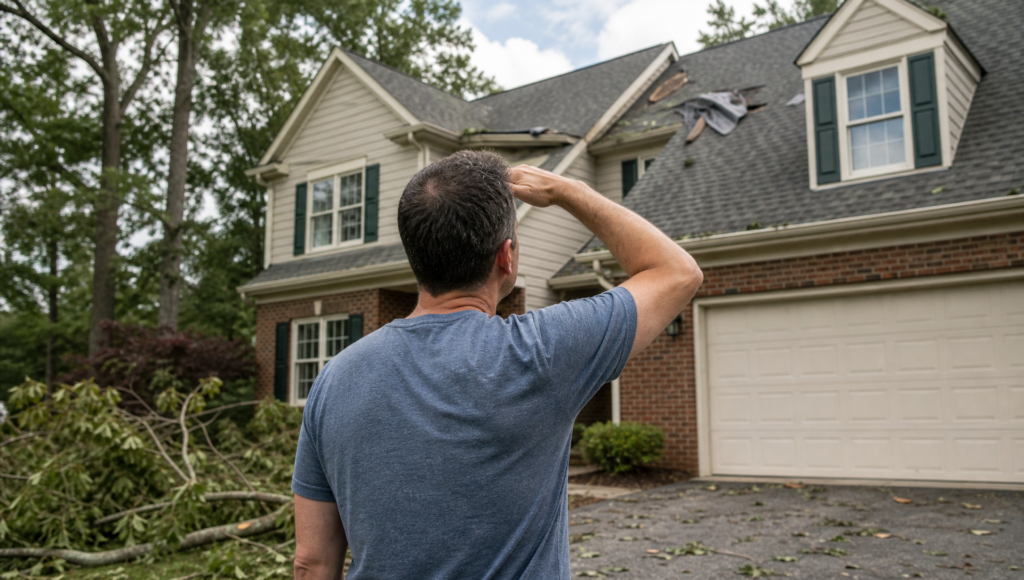
The first step is to avoid panic. Not every instance of missing shingles requires a complete roof replacement.
Conduct a Visual Inspection
From the ground, look for obvious signs of roof damage such as:
- Areas of missing shingles
- Bent or damaged flashing
- Debris accumulation in gutters
- Visible storm impacts
Do not climb onto the roof unless you can do so safely and have experience evaluating roofing materials.
Check Gutters and Surrounding Areas
Damaged or detached shingles often leave behind granules and roofing debris. Inspecting gutters and downspouts can provide clues about the condition of the roof following a storm.
A buildup of granules may indicate broader wear across the roofing system.
Schedule a Roof Inspection
A professional roof inspection is often the best way to determine the extent of the problem.
During a roof inspection, contractors evaluate:
- Areas of missing roof shingles
- Condition of surrounding shingles
- Integrity of the underlayment
- Performance of flashing
- Signs of moisture intrusion
- Overall health of the roof system
Professional roof inspections often uncover hidden issues that may not be visible from the ground.
When a Roof Repair Is Enough
In many cases, targeted roof repair is sufficient.
A repair may be appropriate when:
- Damage is isolated to a small area
- Surrounding shingles remain in good condition
- The roof system is relatively new
- The underlying roof decking remains sound
Qualified contractors can install replacement shingles, secure adjacent materials, and restore the roof’s weather resistance.
Some repairs may involve replacing damaged shingles using a pry bar, installing new roofing nails, applying roofing cement, and ensuring proper sealing around the repaired area.
Professional roof repairs are generally more reliable than rushed homeowner fixes.
When Roof Replacement Becomes Necessary
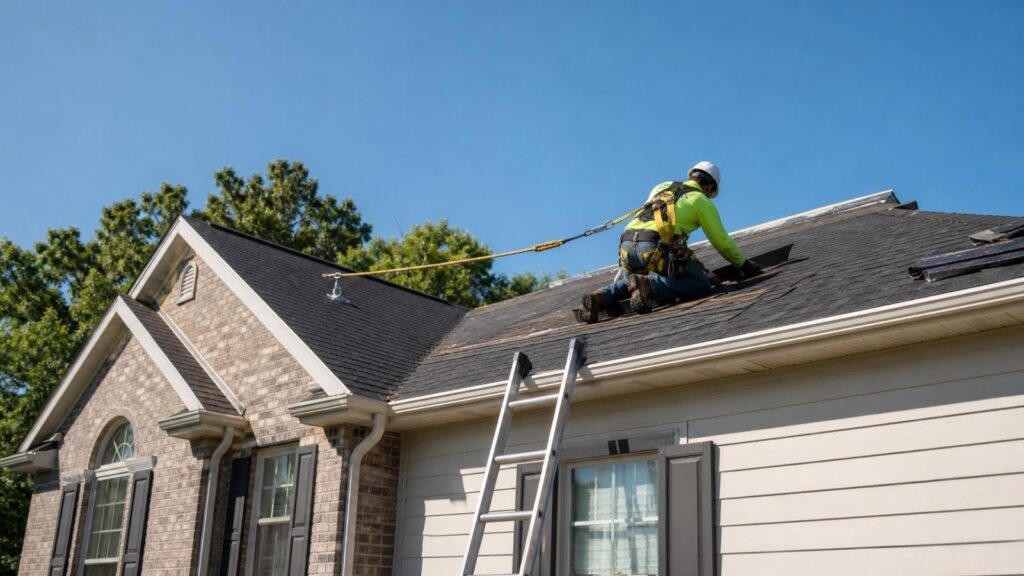
Sometimes the scope of the damage extends beyond a simple repair.
A roof replacement may be recommended when:
- There are numerous areas of missing shingles
- The roof has reached the end of its service life
- Moisture has damaged the roof decking
- Significant structural damage is present
- Widespread storm damage affects multiple sections
When a roof experiences repeated issues involving loose shingles, failed sealants, and aging materials, replacement often provides better long-term value than repeated repairs.
DIY Repairs vs. Professional Roofing Repairs
Some homeowners consider DIY repairs after discovering missing shingles. While minor repairs may appear straightforward, roofing work involves safety risks and technical details.
Improper installation of replacement shingles, incorrect use of roofing cement, or inadequate fastening can lead to future problems.
Professionals understand how to:
- Match existing asphalt shingles
- Evaluate architectural shingles versus 3-tab shingles
- Restore the proper sealant bond
- Assess hidden roof damage
- Protect adjacent components such as siding, gutters, and flashing
For most homeowners, professional roofing repairs provide greater confidence and long-term protection.
Protecting Your Roof System
A few missing shingles may not seem urgent, but they often signal a larger issue within the roof system. Whether caused by aging materials, freeze-thaw cycles, improper installation, or severe storm damage, prompt action helps prevent water damage, roof leaks, and costly structural problems.
The best course of action is to schedule a professional roof inspection, determine the extent of the damage, and address the issue before it worsens. In some cases, a targeted roof repair with properly installed replacement shingles will solve the problem. In others, a full roof replacement may be the smarter long-term investment.
By acting quickly, homeowners can protect their roofing system, preserve their home’s value, and avoid the expensive consequences of leaving missing shingles unaddressed.